
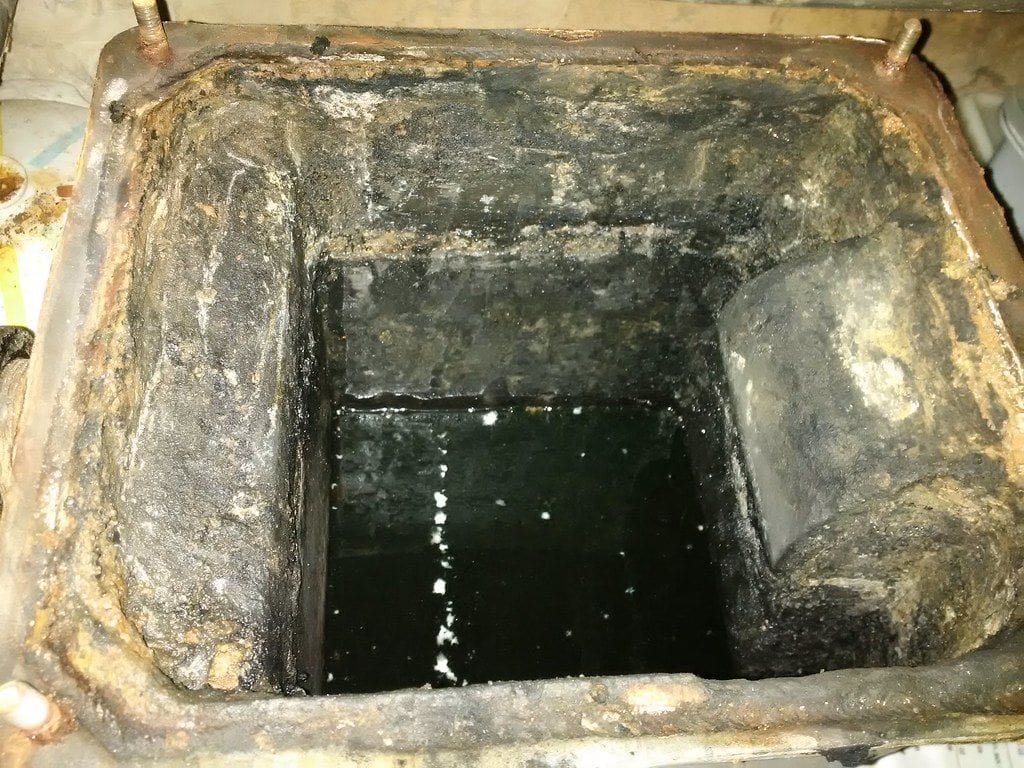
Start with the interceptor, kitchen, and receiving authority
A small under-sink trap and a large exterior gravity interceptor are different jobs. Before scheduling, identify the unit's location, approximate capacity, access opening, last service date, and whether a lift pump or confined interior route is involved. Portland sewer customers should also follow applicable Water Resources requirements; a nonsewer facility may have an onsite system with its own design limits.
Grease service removes accumulated fats, oils, grease, food solids, and wastewater so the unit can work as designed. It does not cure a broken baffle, undersized interceptor, obstructed line, or poor kitchen practice. Repeated overflows shortly after cleaning warrant diagnosis rather than a permanently shorter interval chosen without evidence.
Records matter for a commercial route
Keep the date, unit identification, pumped quantity, observed condition, transporter, and receiving destination. Consistent records show whether accumulation is accelerating and help a manager compare service with cleaning practices or menu changes. They also avoid uncertainty when staff changes or a second interceptor is added.
Maine's transporter rules apply to the conveyance moving regulated non-hazardous waste. Ask the assigned contractor what category covers the material and where it will be accepted. Never pour removed grease into a drain, storm system, yard, or septic field. The final destination is a core part of responsible service, not an afterthought.
Primary source: Maine DEP non-hazardous waste transporter program.
Choose an interval from measured accumulation
A universal calendar interval ignores capacity and kitchen load. Begin with the manufacturer, sewer authority, local approval, or operating requirements that govern the site. Then inspect and record actual accumulation early enough to prevent carryover. High-volume frying, inadequate scraping, leaking fixtures, and hot-water emulsification can change performance.
When requesting a quote, describe parking limits, delivery times, stairs, locked enclosures, odor-sensitive neighbors, and whether service must avoid customer hours. Availability and pricing must be confirmed by the contractor. This site does not claim that one route schedule fits every Portland restaurant, institution, or food producer.
Planning a grease trap cleaning call
Have the property address, best callback number, system records, last service date, and a plain description of the current condition ready. Mention buried lids, gates, ferry access, steep or soft ground, long hose distance, snow storage, and any alarm. The assigned contractor, rather than this website, confirms availability, scope, price, and whether the job fits its equipment.
Portland itself is substantially sewered, so begin by confirming that the parcel uses an onsite system. Island properties and isolated outer parcels can have septic records even while the dense mainland relies on municipal collection. Nearby towns have their own mixtures. A neighborhood name or ZIP code is not proof of wastewater service.
Credential and disposal questions are reasonable
Maine DEP licenses each conveyance used to transport Category C septage. Program materials call for a decal on the driver's side window, a license kept with the conveyance, and shipment records. Pumped material goes to an authorized receiving or disposal facility; ask the assigned contractor to name the destination for your load.
This lead-routing site does not assign a credential number to itself and does not imply ownership of a truck. Ask the contractor who accepts the call to identify the business performing the work, explain relevant licensing or subcontracting, show current insurance if that matters to your project, and state where pumped material will go.
Primary source: Maine DEP non-hazardous waste transporter program.
After the visit
Keep a record of the date, work completed, pumped quantity when applicable, components accessed, observations, destination, and recommended follow-up. Mark access points on a property sketch using fixed measurements. If a problem requires design or permitting, record exactly what the contractor observed and take that information to a licensed site evaluator or the Local Plumbing Inspector.
A useful invoice describes work rather than making broad promises about the future. Ask questions while the condition is visible, and do not allow required inspection stages to be covered early. For recurring symptoms, compare notes across visits so the next professional sees a timeline instead of one isolated episode.